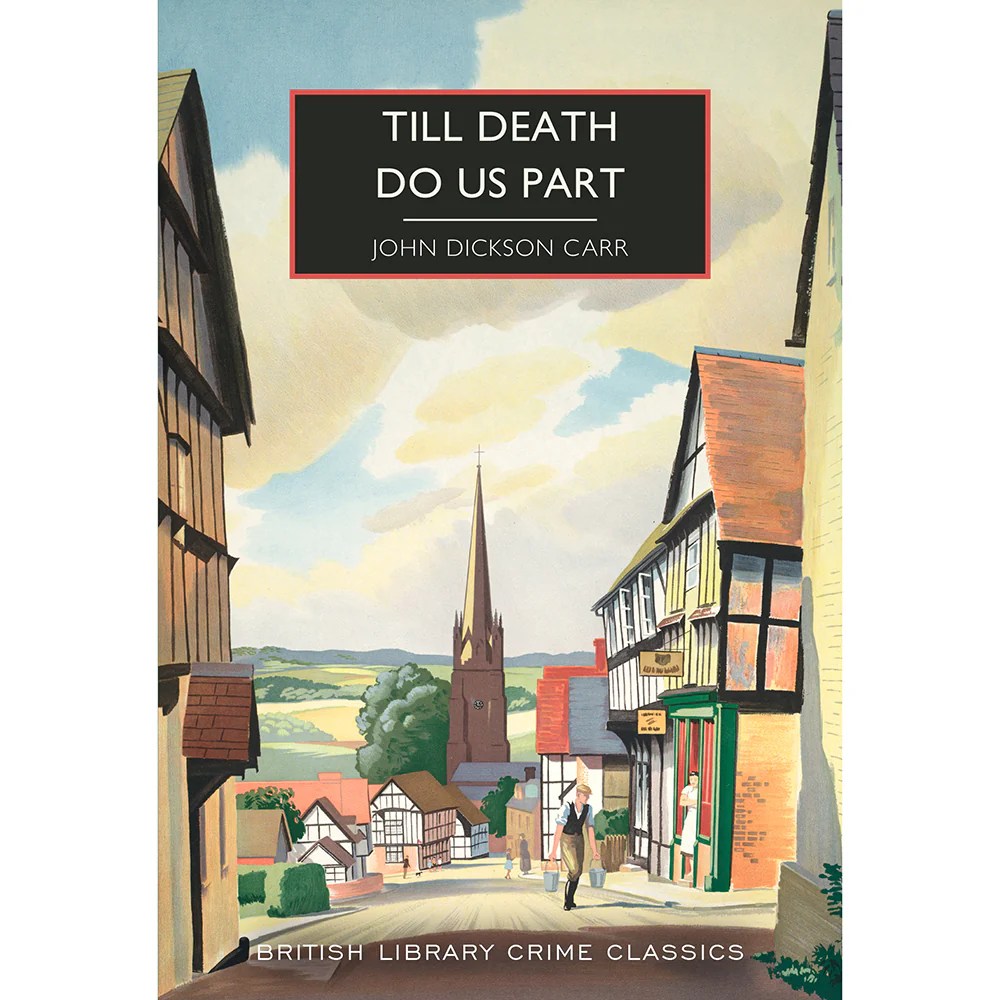
The Impossible Case of John Dickson Carr

John Dickson Carr (1906-1977) was the king of the impossible crime story, or the locked-room mystery. This sub-genre of crime is just as much about how it was done than who committed the crime. A body is found in a room which is locked from the inside. How did the killer enter and leave? This is the type of story in its essence.

The number of impossible crime scenarios a writer can come up with is endless. However, once an impossible crime is thought up, a plausible solution must also be worked out, and this is the challenge for the writer. If a writer writes himself into a corner, he must write himself out if it again.

I have to admire John Dickson Carr’s clever plotting. I also enjoy the darker and more sinister details he adds, which sometimes hint at the supernatural. In The Hollow Man a man leaves no footprints in the snow before vanishing, and there is a hint that someone has come back from the dead. The settings are often old castles and houses, which add a touch of the gothic. John Dickson Carr made the impossible crime his speciality, creating intricate and clever plots to amaze readers and confound their expectations. However, there is a ‘but’ coming…

At its worst, I find Dickson Carr’s writing clunky and confusing. Sometimes characters say odd things, sometimes scenes are described in such a way that the reader has to read it again to understand exactly what’s going on. The reader of crime novels should find the mystery taxing, not the prose style. Many of the characters are two-dimensional (the pretty young woman, the man-about-town, etc).

Another problem Dickson Carr has is that his characters aren’t likeable (of course, I’m writing subjectively, and others may disagree). Take his detectives Gideon Fell and Henry Merrivale. Both are bumbling and sometimes cantakerous, but neither is very endearing. Contrast this with Poirot, who is conceited and absurd, but also a reassuring presence who we like, despite all his eccentricities. When Poirot shows up half way through Sad Cyprus, the reader feels they are on safe ground all of a sudden. Here comes Poirot, and everything is going to be all right. When Henry Merrivale turned up to solve the crime in The White Priory Murders, with sexist comments and ill humour, I didn’t get such a feeling.

John Dickson Carr’s plots are sometimes brilliant, and its on this that his reputation rests. His short story ‘The House in Goblin Wood’ gives us a mystery about a girl who goes missing from a house, and then reappears again without explanation. Years, later in adulthood, she revisits the house, and goes missing from a locked room once again. The story is intriguing, macabre, and ingenious in its plot. There is an explanation, and a clever one at that. (I will apply my previous criticisms to this story: the central detective – in this case Henry Merrivale – acts erratically, and the other characters say and do odd things which brought me out of the story.)

The author’s most famous book – and the most famous of all locked-room mystery stories – is The Hollow Man. This has John Dickson Carr’s regular mix of ingenious plotting and macabre story elements. I have read and enjoyed this book recently. However, it wasn’t my first attempt. I have a memory of being fifteen years old, lying on top of a canal boat one summer, trying to get into this book, but struggling to. I eventually gave up. More recently, I gave up on an audiobook of Death Watch, which starts with the murder, but just throws all the characters and clues at you in the first chapter, which doesn’t draw the reader into the story.

I believe that this obstacle is one that has prevented John Dickson Carr from being a truly popular writer. He is very well known among fans of crime fiction, but his popularity has not reached as far as some of his contemporaries (think Christie, Sayers, Chesterton, etc) who were read by readers who only dabbled in reading the genre. John Dickson Carr’s books are for crime fans. I recently read The Honjin Murders by Seishi Yokomizo. This Japanese crime novel from 1973 explicitly mentions John Dickson Carr in the text, and delivers its own locked room mystery. He is also referenced in subtle ways in the series Jonathan Creek, written by David Renwick, a lifelong fan of the locked room mystery. As I’ve mentioned it, I must recommend Jonathan Creek not just as a series of fantastic locked-room puzzles, but as a generally entertaining series (with charming, likeable characters, and some great gags).

I have titled this piece ‘The Impossible Case of John Dickson Carr’ because he leaves me with a conundrum. I love impossible crimes and intriguing, macabre mysteries. But I am constantly frustrated by his awkward scenes and odd dialogue. I enjoyed The Seat of the Scornful, and also The Black Spectacles, which is a personal favourite of mine among his books. I will continue to read John Dickson Carr, but I am left with the feeling that although I admire the mysteries (indeed, I am inspired to write my own locked-room mystery), I will never warm to his world as I have to the worlds of other writers. Dickson Carr has wit, he has plot ingenuity, but he lacks a common touch, the ability to draw any reader into his books.

Of course, this is subjective, and a true John Dickson Carr fan may put a wonderful case forward for him. I will keep reading his books (I notice that the British Library crime series have at least one more coming next year), and I will continue to be impressed by his plots. But he will never be a writer I am truly fond of, only one I admire. Perhaps that is enough.

Note: The crime fan and pedant in me would like to point out a common mistake. A ‘locked room’ mystery is not the same as a ‘closed circle’ mystery. Even crime writers themselves mix this up sometimes (I won’t mention names!) A ‘closed circle’ mystery is where the murderer can only be one of a certain number of people (think And Then There Were None). A locked room mystery is an impossible crime, a crime in which the murderer has seemingly miraculously entered or left the scene of the crime.

Agatha Christie and the Mystery of the Two Walter Fanes

Like most readers, the writers I regard as my favourites can change from year to year. In my early twenties I read almost everything by Somerset Maugham, which has certainly influenced my approach to writing prose. Agatha Christie is a writer I have repeatedly returned to ever since first reading her as a teenager. Last month I decided to read Sleeping Murder, one of the few Marple books I hadn’t yet read.

I was surprised when a character called Walter Fane was introduced. In the story, he is a lawyer who once proposed to Helen, the murder victim. She had accepted before changing her mind. Is this, we are made to wonder, a motive for murder? Here is the strange thing: Walter Fane is also a main character in Somerset Maugham’s novel The Painted Veil. Maugham’s novel was published in 1925, around fifteen years before Christie wrote Sleeping Murder. The Painted Veil is the story of an unhappily married British physician living in Hong Kong. His wife regrets her hasty decision to marry him. When she is unfaithful to him, he decides they should move to a village where there has been a cholera outbreak, a potentially perilous decision for them both.

The two Walter Fanes are not dissimilar. Both are colonial types – one in Hong Kong and the other in India. They are both buttoned-up men who are not emotionally forthcoming. One proposes marriage to a free-spirited woman who says yes and then changes her mind; the other proposes marriage to a free-spirited woman, who replies “I suppose so,” but finds the marriage dull. In other words, both Walter Fanes inspire tepid responses from their love interests. In Christie’s book this makes the character a good suspect; in Maugham’s it makes him out-of-step with his vivacious wife. Maugham was good with character names. ‘Fane’ has connotations of weakness. I remember another Maugham character called McPhail, the homonym of ‘fail’ being an appropriate connotation for the character.

The question is this: Why did Agatha Christie use the name Walter Fane? Christie was well read and in touch with the literary and theatrical landscape of the first half of the twentieth century. Maugham was a playwright as well as a novelist. In fact, in their day, Maugham and Christie were two of the most popular playrights in the West End. Maugham bowed out of writing for theatre at about the time Christie started.

There are several references in Christie’s books to other writers, sometimes introduced with subtlety. In Hercule Poirot’s Christmas the butler talks about the experience of deja vu, the feeling that you have lived something before. He mentions a play in London that was about that subject (but does not name it). The play is likely to be J.B. Priestley’s ‘I Have Been Here Before’, which opened in London in 1937, a year before Christie published Hercule Poirot’s Christmas. I imagine Christie had seen the play, and its theme was fresh in her mind as she wrote Poirot’s Christmas mystery.

This brings us to the subject of the mind. As a writer myself, I know that sometimes I have to make up something on the spot, dive into my mind for some fabricated detail. It is plausible that when Christie did this as she was writing Sleeping Murder, she came up with a name which had been stored in some unconscious part of her mind. Walter Fane sounded like a good name for an emotionally repressed Englishman living in a British colonial outpost…because it already was the name of such a character. The fact that they are similar characters may have been a factor. I certainly doubt that there was anything intentional about it.

For the prolific writer, names are always an issue. Christie’s books often contain large casts (remember the twelve suspects on the Orient Express?), and with eighty or so novels, we can speculate (we won’t actually calculate) that Christie invented over a thousand names. On this occasion, a name slipped through from a book she had read a few years before. Sleeping Murder was written in the 1940s, but not published until after her death in the 1970s. I wonder whether, had it been published in the time when it was written, an editor might have pointed out to her the coincidence? By the time readers had the chance to read Sleeping Murder, Agatha Christie had died.

There is a further intrigue: Maugham’s Walter Fane was meant to be called Walter Lane, until legal trouble from a couple by the name of Lane living in Hong Kong forced the change. The change from Lane to Fane was an obligation.

Of course, this takes nothing away from the great lady herself. Of the two novelists, Maugham’s Fane came first, but Christie’s Fane is likely to be around for a lot longer.

Finally, I would like to recommend two brilliant biographies of each of these writers: Agatha Christie by Lucy Worsley, and The Secret Lives of Somerset Maugham by Selina Hastings.

Why I Continue to Read Agatha Christie

Like many fans, I discovered Agatha Christie’s books as a teenager, when I was finding engaging novels to read independently. They contained mystery, suspense, and big characters. There were also around seventy novels to read, which mirrored the patterns of the collections I’d just grown out of, such as Enid Blyton and Richmal Crompton, who wrote more books than any child could read.

To begin with I read tattered paperbacks from my parents’ bookshelves, such as The Listerdale Mystery and Crooked House, then I borrowed or bought the famous ones: Murder on the Orient Express, Death on the Nile, And Then There Were None. None of her books were too long, all of them were easy to read. They took place in the world of steam train engines, remote islands, luxury cruise ships, and picturesque villages. In this respect, they weren’t unlike the adventure stories I had not long grown out of.

One Sunday, I remember overhearing a family friend over the meal table remark that Agatha Christie books were “okay for teenagers, but you grow out of them”. It was probably an expression of the common snobbery towards genre fiction, and the belief that any formative reading was just a stepping stone towards reading and understanding Ulysses or The Brothers Karamazov.

And yet, years later, I still haven’t grown out of reading Agatha Christie.

My reading is wide and varied, from classic fiction to epic poems, from spirituality to psychology. However, I always go back to the crime genre and to Agatha Christie. I still love those classic elements of drama, suspense, and mystery. In Agatha Christie’s books we get them in concentrated doses, alongside the quality of the great illusion, as we wait for the big reveal and find out how we’ve been tricked by misdirection and red herrings.

Drama

The drama element of Agatha Christie’s books sometimes gets lost in her reputation for crime and mystery. Take, for example, Sad Cypress, in which an engagement is threatened by a woman’s past, and there isn’t a murder, or an appearance from Poirot, until halfway through the book. Similarly, Towards Zero offers an intriguing personal problem: should Nevile Strange and his new wife take a holiday at the house of a family friend, knowing that his estranged ex-wife is there. And once it seems clear that the holiday will go ahead, the other guests are trying to work out whose idea it was and who will gain from such an awkward house party. Again, there is no crime until halfway through the book, but Christie handles emotional, human drama very well.

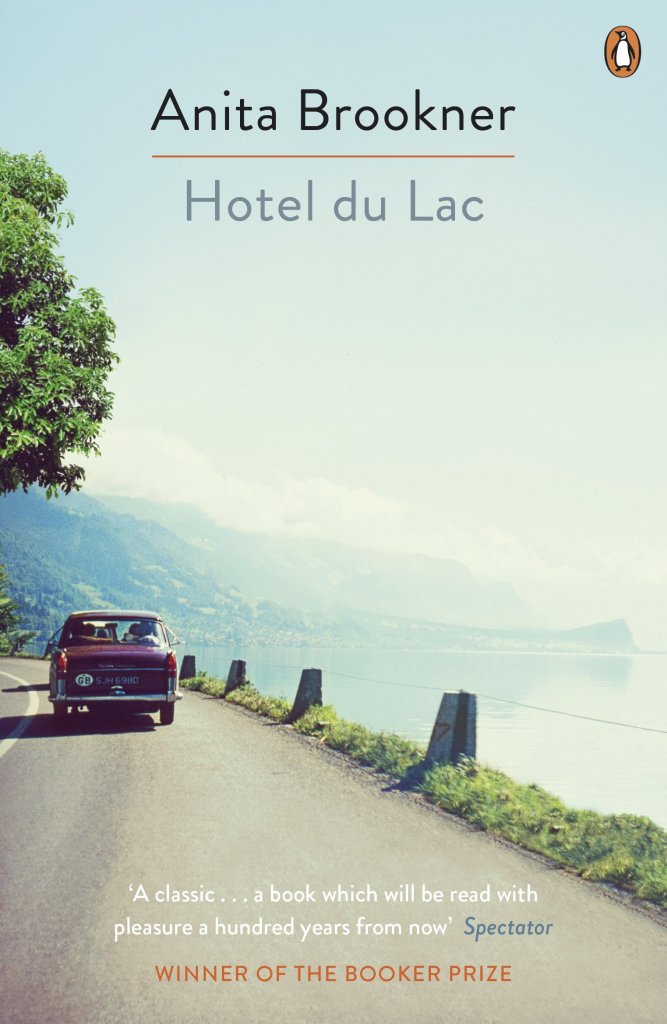
In Anita Brookner’s classic Booker-winning novel Hotel du Lac, a woman stays at a hotel by a Swiss lake after a personal crisis. In this picturesque setting, the protagonist observes the daily habits of her fellow guests, getting clues as to who they are and why they’re there. It struck me as I read it that it’s almost an Agatha Christie set-up. Personal crises, foreign hotels, strangers thrown together, all of these are classic Christie ingredients. The difference is that Brookner channelled this into a literary novel, and Christie used such details as part of the physical and emotional landscape for crime stories.

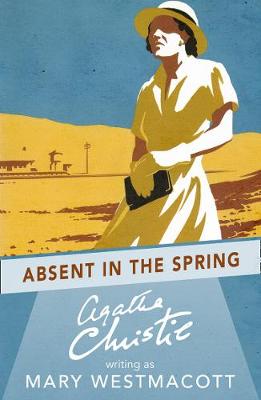
As well as crime novels, Agatha Christie wrote a series of novels under the name of Mary Westmacott. Those that I’ve read are probably best described as family dramas. I found Absent in the Spring to be intriguing, with its middle-eastern setting and its tangled family relationships. It was, in many ways, a classic Christie novel, just without the murder. The denouement was focused on a woman’s relationships with her children and husband. Or, to put it another way, the book’s final revelation was emotional, not criminal.

Languages

When I decided to learn Portuguese, I chose an Agatha Christie book to be the first Portuguese language book I read. Why? Because it was the perfect mix of the unfamiliar – the Portuguese language – and the familiar: the settings, plots and characters of the Poirot short stories. The book was The Labours of Hércules (Os Trabalhos de Hércules), and I still remember the little bookshop in Porto where I bought it.

In my (off and on) attempts to learn French I’ve read some of the Agatha Christie bande dessinee adaptations. Many of these aren’t available in English, but reflect the popularity of BD books in France and Belgium, as well as the universal and enduring appeal of Agatha Christie. I would actually recommend Agatha Christie fans use their enthusiasm and knowledge of the books if they are trying to learn a new language.

Literary Value

Agatha Christie’s books are uneven, without a doubt. You can read one of the best ones, then move in to one of the weaker ones and wonder why a writer capable of writing one has written such a poor book as the other. Perhaps this is what comes of writing so many books.

I remember reading The Secret of Chimneys and laughing out loud at the Wodhousian dialogue and characterizations. It was sharp, funny, and the plot was tight. In contrast, other books (such as Murder is Easy, or The Clocks) come across as wooden and humourless. Sometimes her books are sparkling and well-observed, while others are clumsy and lifeless.

No doubt there are literary critics and authors (published or unpublished) who resent the inexplicable success of Agatha Christie, just as there was an inevitable backlash against J.K. Rowling. I say ‘inexplicable’ because there are wonderful writers out there who are overlooked or forgotten, like Ngaio Marsh, Margery Allingham or John Dickson Carr. Allingham is a better prose writer than Christie, and many of Christie’s contemporaries are more consistent in quality. But Christie has an X factor, as many successful writers do.

I recently read Towards Zero for the first time, and I thought it was very good. There are still a handful of Christie books I’ve not read, but not many. I’ll ration them, because at some point I’ll run out. I’ve tried reading some of her contemporaries, like Ngaio Marsh and Margery Allingham, but the books didn’t have the appeal. There is still something of an enigma to Christie’s appeal and success, that even her most famous detectives would struggle to solve.

The Unpainted Veil

One morning in 1956, almost a year after the publication of Moonraker, Ian Fleming received a letter from a stranger. Fleming had written three James Bond novels, but they weren’t yet as successful as he had hoped. The author of the letter was Geoffrey Boothroyd, a Glaswegian who wrote to point out how poor Bond’s choice of firearms was. Boothroyd had an expert knowledge of firearms, and Fleming didn’t. From then on Fleming took Boothroyd’s advice, and went as far as creating a character in the series called Major Boothroyd, a specialist in weapons.

Characters who appear in fiction as thinly disguised versions of real people may occur more often than we think. In the case of Fleming and Boothroyd the result was flattering. But there are far more dangerous, and less happy, examples which might serve as warnings.

Somerset Maugham brilliantly captures bohemian Paris in his novel The Magician. The magician of the title, the disturbing and sinister Oliver Haddo, is a physically and morally repulsive man. There is little to redeem him as he manipulates the innocent, invokes dark forces, and carries out terrible human experiments. The book was so shocking that initially Maugham’s agent couldn’t find a publisher. The character of Haddo was based on Aleister Crawley, the infamous occultist, who Maugham met and disliked. The resemblance was clear, complete with vanity, charisma, and amorality. The magician comes out of the book badly, but Crawley was pleased with the further noteriety that followed. In keeping with his bizarre behaviour he reviewed the book in Vanity Fair, signing the review as Oliver Haddo. It’s difficult to know whether this response was just affectation. It is reported that later in life Crawley resented Maugham.

Once a book is published, and especially after it has gained success, there is no going back. The characters are out there. If there is damage done, it is done. There’s the insulting representation of Hugh Walpole as Alroy Kear in Cakes and Ale (Maugham again) or the character Adam Lang, an ex-prime minister guilty of war crimes, who resembles Tony Blair in more ways than Tony Blair would be comfortable with, in Robert Harris’ The Ghost. These authors have found ways of saying through fiction what they could never say in real life for fear of libel.

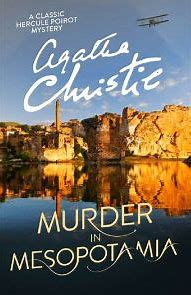
Perhaps the most satisfying way of putting a real person into fiction was achieved by Agatha Christie. She spent time with the controlling and eccentric Katherine Wooley on an expedition to Ur in modern Iraq. The two women did not get on well. Katherine Wooley became Louise Leidner in Murder in Messopatamia, and was promptly murdered.

Perhaps the most satisfying way of putting a real person into fiction was achieved by Agatha Christie. She spent time with the controlling and eccentric Katherine Wooley on an expedition to Ur in modern Iraq. The two women did not get on well. Katherine Wooley became Louise Leidner in Murder in Messopatamia, and was promptly murdered.

For the writer it is an encouragement to know that inspiration for characters is all around. And for everyone else it is a warning to be extra careful around writers.

Sources: The Secret Life of Somerset Maugham – Selina Hastings

The Life and Crimes of Agatha Christie – Charles Osbourne

Agatha Christie: A Life – Laura Thompson

Ian Fleming and James Bond – Ben McIntyre